WanderWallet Raises EUR 430K to Make It Easier for Tourists to Pay Without a Local Bank Account
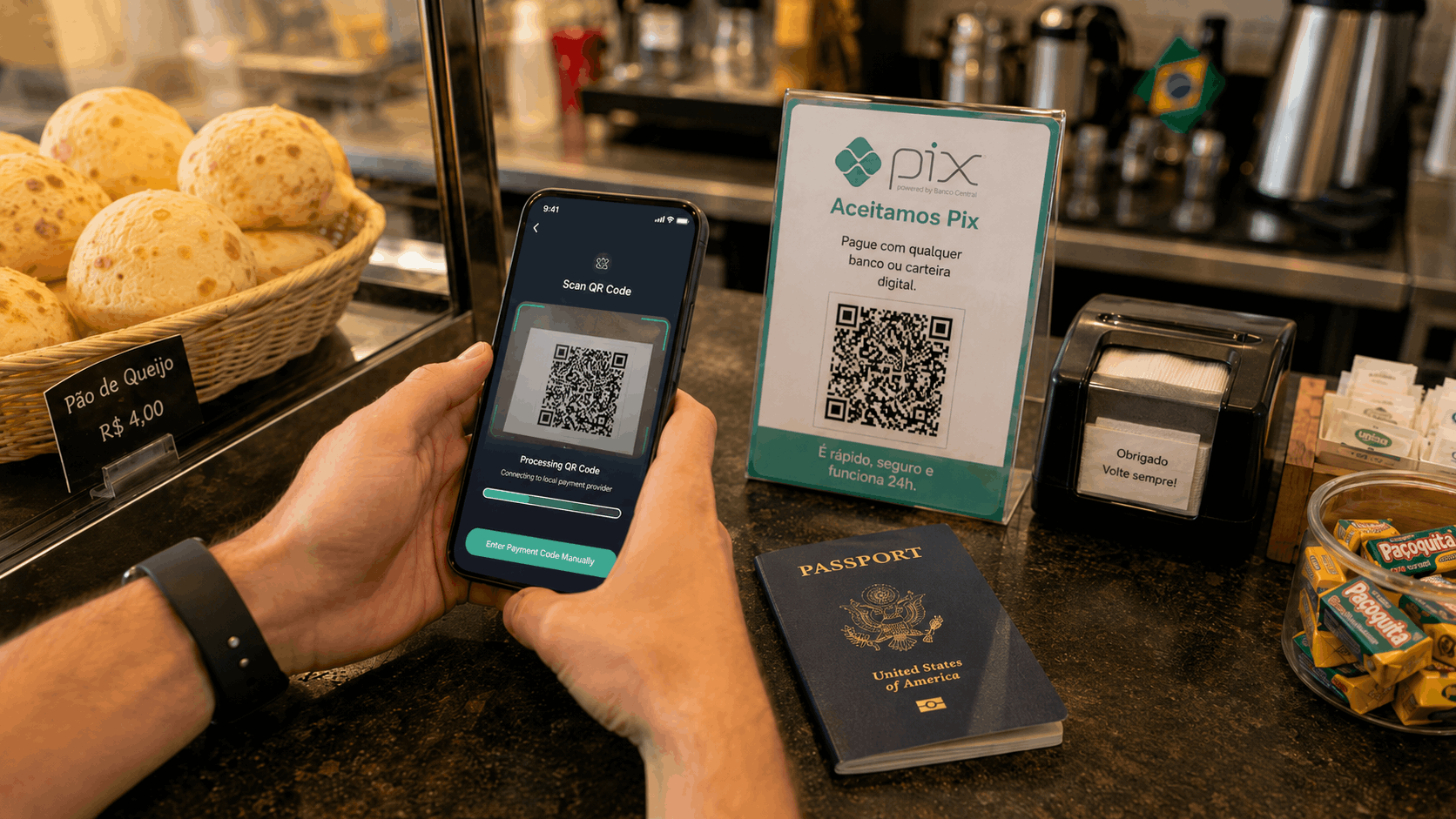
WanderWallet, a travel-first wallet that lets foreigners pay like locals across Latin America, has announced a EUR 430K pre-seed round from BDPartners and DEPO Ventures. The service is already live in Brazil, Argentina, and Bolivia, where instant payments have effectively replaced cards as the primary way people pay. In Brazil alone, Pix now processes more transactions than Visa, Mastercard, and all other payment methods combined. For millions of international visitors, however, these local systems often remain out of reach due to practical barriers.
“We worked with the WanderWallet team from the very early days, and the conviction we had then has only grown stronger,” says Michal Ciffra, Partner at DEPO Ventures. “This is a problem that looks small on a spreadsheet and feels enormous when you are living it. The team understands that better than anyone. WanderWallet is part of a broader movement building a new, inclusive financial infrastructure without borders and unnecessary transactional costs,” he adds.
The round was co-led by BDPartners alongside DEPO Ventures, one of Central Europe’s most active early-stage angel funds. BDPartners was co-founded by Ladislav Bartoníček, a founding shareholder of the PPF Group and former CEO of Generali PPF Holding, and Jean-Pascal Duvieusart, a former McKinsey Partner focused on emerging markets financial services.
Cross-border payments without a local bank account
Most cross-border fintechs focus primarily on moving money between countries. But tourists and expats in Latin America face a different challenge: how to pay day to day in shops, cafés, and for services when locals no longer rely on cards.
In countries such as Brazil, Argentina, and Bolivia, payments have shifted to instant local systems (Pix in Brazil, Mercado Pago in Argentina, and the national QR Simple standard in Bolivia). These work extremely well for residents, but are often practically inaccessible for foreigners. They typically require a local bank account, a local identifier (tax ID), and time-consuming paperwork. So when a traveler is standing at the checkout counter and their card fails, or simply isn’t the preferred option, the issue isn’t a missing remittance product. The issue is that they can’t access the same way of paying as locals.
WanderWallet removes that barrier. The platform connects foreign users directly to the local payment rails residents use every day without requiring a local bank account, a local tax ID, or lengthy administrative processes. The goal is simple: so people don’t have to “get by” in a new country, but can pay as naturally as they do at home.
“The payment problem for travelers isn’t moving money. It’s being able to live normally once you arrive,” says Vojta Pohůnek, Co-Founder and CEO of WanderWallet. “We built WanderWallet so that paying at a checkout counter in a new country feels just as natural as it does at home,” he adds.
Where is this heading?
The market is responding quickly. In its first month, the service processed USD 9,000 in payment volume (nearly CZK 190,000), and four months later it reached USD 360,000 (over CZK 7.5 million) driven entirely by organic growth as users recommended the product to one another. As the company launches additional markets, it expects to reach multi-million-dollar monthly payment volume by the end of 2026. WanderWallet will use the pre-seed funding to expand into more countries, strengthen compliance and reliability infrastructure, and grow its support team, which it treats as a core part of the product.
VÍCE ČLÁNKŮ




O NÁS
DEPO Ventures je venture kapitálová skupina investující do raných startupů z regionu střední a východní Evropy. Se svým aktuálním fondem se zaměřuje na na strategické technologie z oblastí jako je obrana, vesmír a fintech. Od roku 2019 má na kontě více než 60 investic. Vedle samotných investic se DEPO dlouhodobě věnuje také rozvoji startupového a investorského ekosystému.